
 English
 中文
中文
Ceramic Tableware Safety Guide: Identifying Risks in High-Fired White Porcelain and Colored Glazes
Category: Product Safety | Date: September 2026
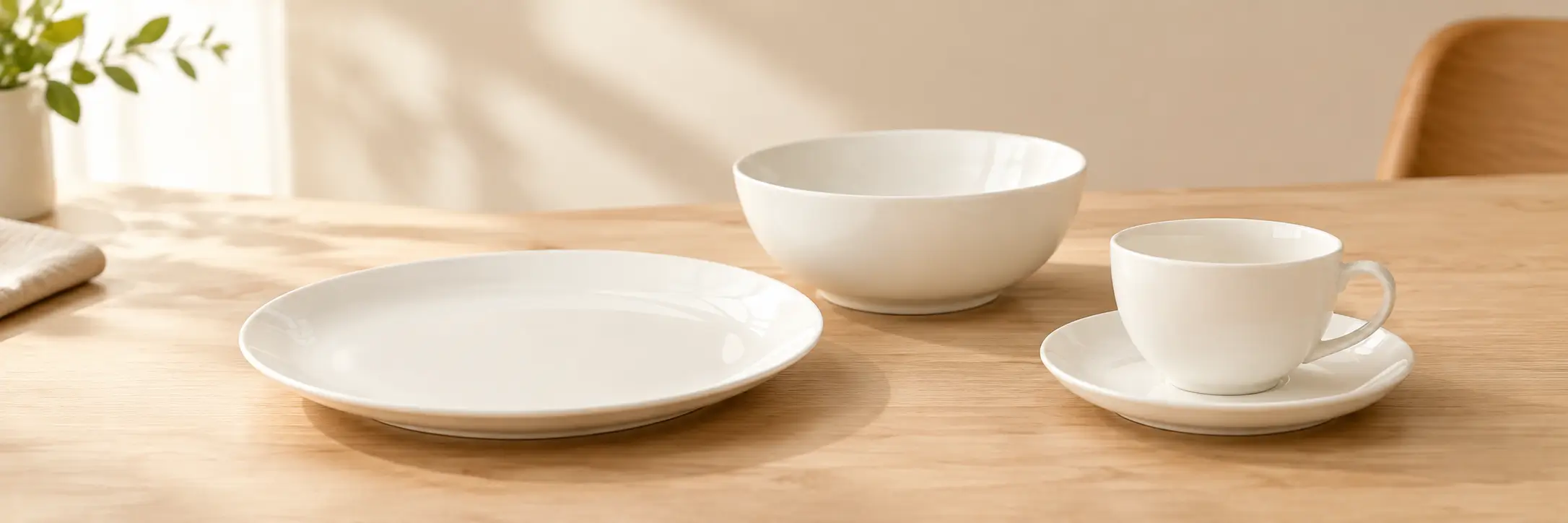
When "Food-Grade" Is No Longer Trustworthy
Recent reports on substandard stainless steel tableware — falsely labeled as food-grade 304/316 — have renewed attention on what we eat from. When metal tableware fails safety standards, heavy metals like lead, cadmium, and nickel can leach into food, especially with hot or acidic dishes.
Many buyers are turning to ceramics as an alternative. But ceramics are not automatically safe. A widely circulated claim in the market says: “Those cheap, colorful bowls and cups you see online — they look nice, but they’re actually low-grade toxic.” Is this true? As a procurement decision-maker, you need to know the facts.
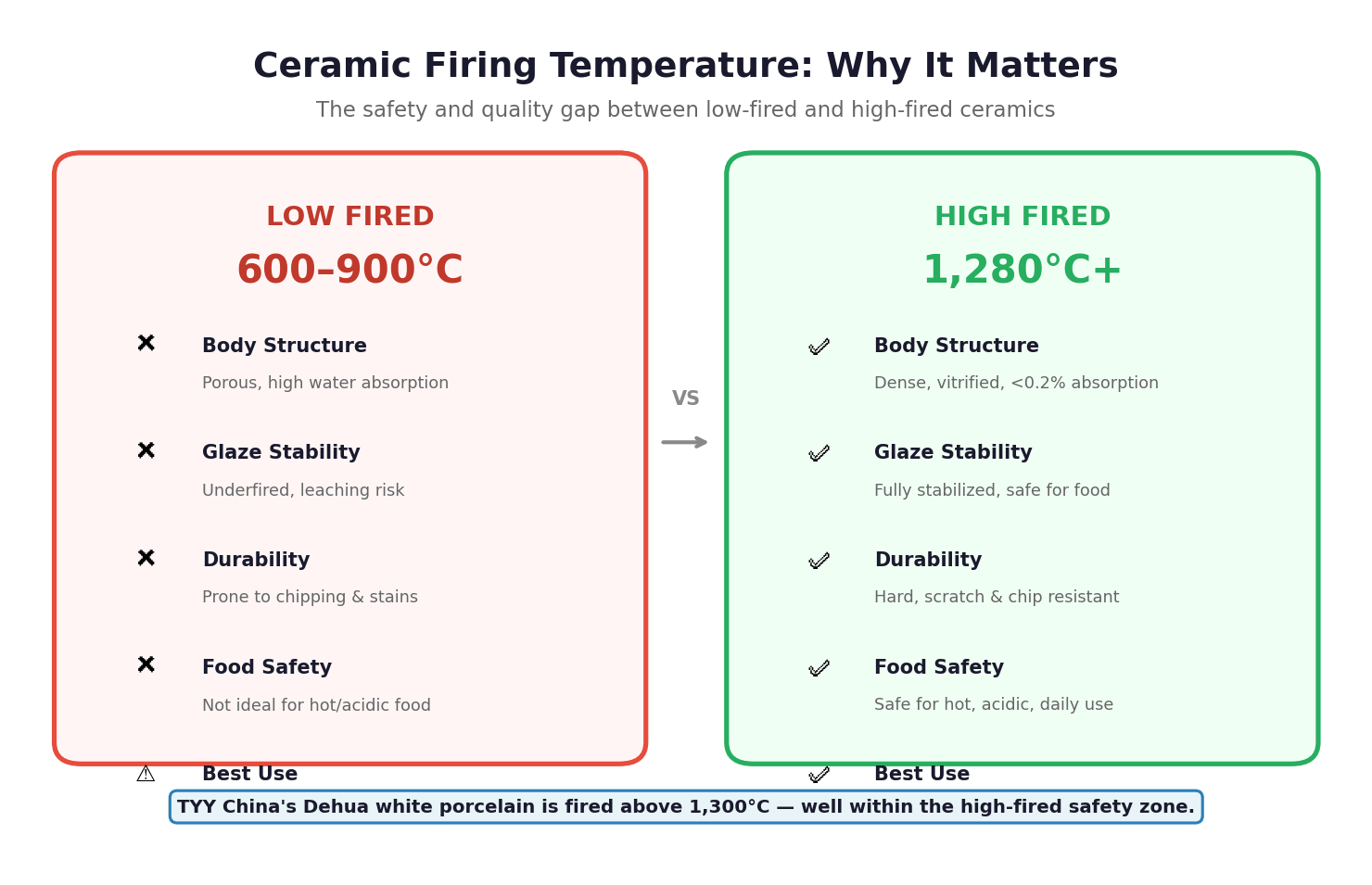
High fired ceramics offer denser body, stable glaze, and safer food contact than low fired alternatives.
Temperature Is the First Threshold
Ceramics are categorized by firing temperature, which directly determines the safety baseline:
| Feature | Low Fired (600–900°C) | High Fired (1,000°C+) |
|---|---|---|
|
Firing Temp |
600–900°C |
1,000°C+ (Dehua white porcelain typically 1,280°C+) |
|
Body Density |
Porous, high absorption |
Dense, vitrified |
|
Glaze Stability |
Underfired, weak thermal resistance |
Mature glaze, strong thermal resistance |
|
Thermal Shock |
Not recommended for rapid temp change |
Oven and microwave safe |
|
Glaze Durability |
Soft, prone to dishwasher wear |
Hard, dishwasher suitable |
|
Best Use |
Cold dishes, decorative items |
Hot food, soup, oven, microwave |
Core difference: High firing (1,280°C+) vitrifies both body and glaze, locking lead, cadmium, and other heavy metals into a stable glass structure. Low-fired ceramics have immature glazes; when exposed to heat or acidic food, heavy metal migration risk increases significantly.
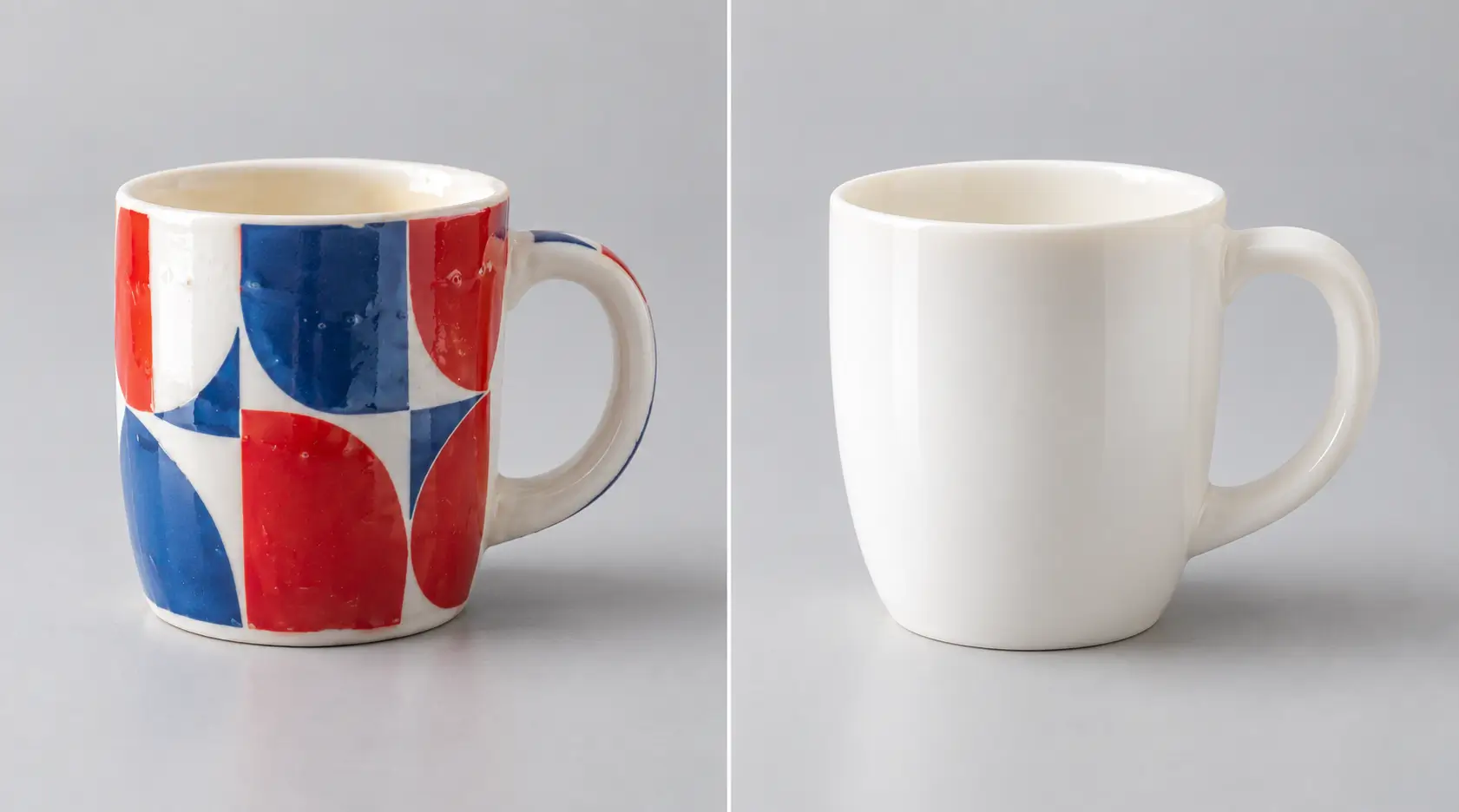
Colorful Glazes: The Risk Behind the Aesthetics
Back to the question: Are cheap colorful tableware items really “low-toxic”?
The answer: Not all colors are toxic, but the combination of low price + vivid colors + unknown origin does carry higher risk.
The key lies in pigment placement and firing process:
- Overglaze: Pigments are painted on top of the glaze surface, then fixed at 600–800°C. Heavy metals (lead, cadmium) in the pigments are not sealed by high-temperature melting and directly contact food. When exposed to hot or acidic food, or long-term abrasion, leaching risk is highest. Most low-cost colorful bowls, cups, and teaware on the market fall into this category.
- In-glaze: Pigments penetrate into the glaze layer and are fired around 1,000°C. More stable than overglaze, but still less secure than underglaze.
- Underglaze: Pigments are painted on the raw body, then covered with transparent glaze and fired at 1,280°C+ in a single firing. Pigments are completely sealed under the glaze layer, preventing heavy metals from contacting food. This is currently the safest colored decoration process.
Why do vivid colors carry higher risk? This is not unique to ceramics. In textiles, plastics, and coatings, the more vivid the color, the more complex the chemical additives required to achieve colorfastness — heavy metal oxides, organic solvents, stabilizers, etc. — and the higher the probability of failing environmental tests. Ceramic glazes follow the same logic: red, orange, and yellow hues typically rely on lead and cadmium oxides for coloration. While compliant high-temperature underglaze can use these pigments safely, low-cost products often cut corners on raw material purity and firing temperature.
A notable fact: European and North American markets generally enforce stricter regulations on food-contact materials than the Chinese domestic market. Standards such as FDA and EU 1935/2004 set stringent limits on lead and cadmium leaching, driving export-oriented suppliers toward safer processes. For buyers targeting Western markets, understanding these differences is not just about compliance — it is a competitive advantage.
Quick identification rules:
- Colored patterns feel raised or textured → likely overglaze, use caution with hot food
- Colored patterns feel smooth and sit beneath the glaze → likely underglaze, relatively safer
- More vivid color + lower price + unknown origin → higher risk
Cost Difference: What Makes High-Fired White Porcelain More Expensive
The premium for high-fired white porcelain comes from real production inputs. Here are industry-typical ranges:
| Cost Item | Low Fired | High Fired (1,280°C+) | Difference |
|---|---|---|---|
|
Kiln energy |
Standard |
50%–70% higher |
Major cost driver |
|
Single kiln cycle |
8–12 hours |
16–24 hours (incl. cooling) |
Capacity halved |
|
Kaolin purity requirement |
Standard |
Higher, stricter screening |
Raw material +15%–25% |
|
Yield rate |
~90%–95% |
~80%–88% |
Defect cost allocation |
|
Combined ex-factory cost |
Baseline |
30%–60% higher |
Depends on shape complexity |
For buyers: If your end users need “microwave-safe, dishwasher-safe” selling points, the 30%–60% premium for high-fired white porcelain is justified — you are paying for thermal stability, durability, and compliance safety. If the product positioning is purely decorative or for cold dishes, low-fired ceramics can control costs, but you must accurately inform end users of the intended use to avoid safety incidents and after-sales disputes.
Where Dehua White Porcelain Excels
Dehua, Fujian, is the birthplace of Blanc de Chine. The local high-potassium, low-iron kaolin clay is naturally suited for white porcelain, with traditional firing temperatures of 1,280–1,350°C.
Dehua white porcelain’s safety advantage is not marketing — it is the result of craft tradition:
- High-temperature vitrification creates an extremely dense body with very low water absorption (typically < 0.5%)
- Pure white or ivory glazes do not require additional heavy metal colorants
- Mature mold-based forming and standardized firing ensure batch consistency
At TYY China, our white porcelain tableware and teaware collections are produced using these high-temperature protocols. For orders involving food contact, hot food use, or export compliance, we can provide third-party test reports.
Practical Checklist for Procurement Teams
- Firing temperature range. 1,000°C is the dividing line; 1,280°C+ is high-fired porcelain.
- Decoration process. For colored products, ask whether it is overglaze, in-glaze, or underglaze. Avoid interior overglaze for hot food applications.
- Sample verification. Touch colored patterns with your finger. Raised, textured overglaze is not recommended for hot food interiors.
- Testing cooperation. The supplier should be able to assist with third-party lab testing upon request (typically at the buyer’s expense).
Closing
This article is for ceramic product safety knowledge sharing only and does not constitute specific sourcing advice. Final supplier selection should be based on actual use case, target market regulations, and due diligence.